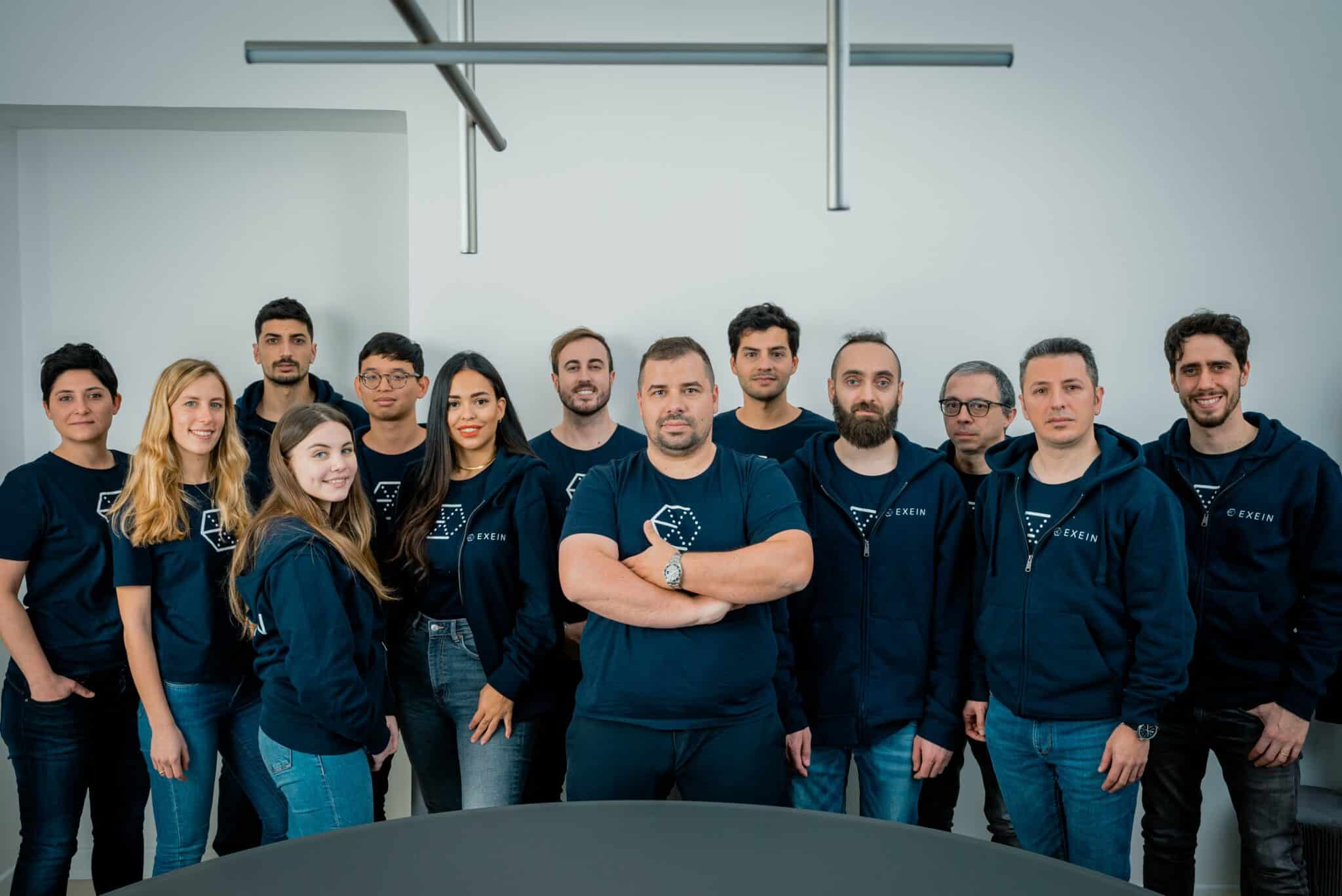

Exein the Rome-based cybersecurity startup, has secured $270 million in Series C funding led by Headline at a $1.7 billion valuation. The round marks an extraordinary 30x valuation increase in just two years, reflecting institutional conviction that securing AI-powered machines—not just networks—is the defining cybersecurity challenge of the decade.
The funding comes after a furious capital-raising pace: €15 million Series B (July 2024), €70 million Series C (July 2025), €100 million Series C extension (December 2025), and now $270 million in fresh capital (September 2026). Exein’s first-half 2026 annual recurring revenue was four times higher than a year earlier, signaling explosive revenue growth that justifies the valuation jump.
Exein Funding & Valuation Details By CREDX Media
| Startup | Exein |
| Founder & CEO | Gianni Cuozzo |
| Founded | 2018 |
| Headquarters | Rome, Italy |
| Latest Round (Series C) | $270M Funding |
| Lead Investor | Headline |
| Other Investors | Sofina, Goldman Sachs, European Investment Bank (Tech Champions Initiative), KfW Capital, T.Capital, Balderton, HV, Intrepid Growth Partners, 33N Ventures, Lakestar, Supernova Invest, Blue Cloud Ventures, Geodesic Capital |
| Previous Valuation (December 2025) | ~$800M |
| Current Valuation | $1.7B |
| Valuation Growth | 30x in 2 years |
| Total Funding Raised | $500M+ |
| H1 2026 ARR | 4x higher than H1 2025 |
| Revenue Growth Rate | 4x year-over-year (H1 2026 vs H1 2025) |
| Device Footprint | 2+ billion connected devices |
| Customer Sectors | Industrial Automation, Automotive, Energy, Healthcare, Semiconductors, Aerospace, Robotics |
| APAC Revenue | ~50% of total |
| Category | Device-Level IoT Security, Physical AI Security |
Startup Overview: Exein
What Exein Is Building in Simple Words
Exein embeds cybersecurity directly into the firmware of connected devices—rather than trying to protect them from the network perimeter. This matters because when a laptop gets hacked, your data leaks. When a robot, drone, or autonomous car gets hacked, someone can get hurt.
Here’s what Exein actually does:
1. Kernel-Level Device Security
- Photon platform runs at the operating system kernel level
- Blocks malicious code execution before it happens
- Works across IoT devices, industrial equipment, autonomous systems, robotics
- Deployed on 2+ billion connected devices
2. Threat Detection at Machine Speed
- Traditional security watches networks for anomalies
- By the time an anomaly appears on a dashboard, a robot may have already acted
- Exein’s agent-based approach detects threats in milliseconds, at “machine speed”
- No human approval required—autonomous response to attacks
3. Foundation Model Training on Machine Telemetry
- Building proprietary foundation models trained on 2+ years of actual machine data
- Unlike traditional ML models trained on human-generated text, Exein’s models are trained on how machines actually behave
- First foundation models expected Q1 2027
- Autonomous agents to follow by end of 2026
4. Hardware Agnostic Integration
- Works across robotics manufacturers, automotive suppliers, industrial equipment makers
- Device-level security means protection regardless of network architecture
- No dependency on network infrastructure or cloud connectivity
5. Expansion into Physical AI Security
- As AI moves from cloud to edge (robots, vehicles, drones, machinery), Exein’s positioning shifts from “IoT security” to “physical AI security”
- Autonomous systems require autonomous defense—no time for human decision-making
- Foundation models enable predictive threat detection
Why Exein Matters
- The Attack Surface Is Expanding: IoT security market was $35.5 billion in 2024 and is projected to reach $141.8 billion by 2030—a 4x expansion. Every connected device is a potential attack vector. Traditional network-layer security isn’t enough.
- AI-Powered Machines Need AI-Powered Defense: As AI moves from cloud computing to edge devices (autonomous vehicles, industrial robots, medical equipment), the attack surface becomes physical. A hacked robot arm in a manufacturing plant can injure workers. A compromised autonomous vehicle can crash. Network-layer detection is too slow—machines operate at millisecond latencies.
- Exein Has 2+ Billion Devices Generating Unique Data: Every device Exein protects generates telemetry data—normal operating behavior, anomalies, attack signatures. This dataset is proprietary and difficult for competitors to replicate. Two billion devices worth of data trains better ML models than any rival can access.
- H1 2026 ARR Growth of 4x YoY Is Extreme: Hyperscale growth at this stage signals that Exein has moved beyond early adoption. Customers are committing at scale because the product solves a mission-critical problem with clear ROI: preventing breaches that could cost millions in liability and downtime.
- European Tech at Global Scale: Exein challenges the narrative that global AI and security leadership is US-only. A Rome-based startup is building mission-critical infrastructure with backing from Goldman Sachs, Sofina, and the European Investment Bank.
Our Take on Exein
Exein is building the security layer that autonomous machines require to be trusted infrastructure.
The strategic insight: as machines become intelligent and autonomous, they need security that’s also intelligent and autonomous. Traditional cybersecurity assumes human operators will review alerts and make decisions. Autonomous systems require autonomous defense.
Exein’s foundation models trained on 2+ billion connected devices represent a genuine moat. Competitors like Claroty and Nozomi Networks watch networks from the outside—detection after the fact. Armis (acquired by ServiceNow) does network-layer anomaly detection. But none of them have 2+ billion connected devices feeding proprietary ML models in real-time.
The $1.7B valuation is justified on fundamentals: 4x YoY ARR growth, enterprise customers across mission-critical sectors (automotive, aerospace, energy, healthcare), expanding APAC presence (50% of revenue), and a product architecture that becomes more defensible as the device footprint scales.
The real test: can Exein stay independent as larger players (ServiceNow, Palo Alto Networks, Cisco) recognize the strategic value of device-level AI security and attempt to build or acquire similar capabilities?
Founder Background: Building Toward Physical AI
Gianni Cuozzo (Founder & CEO) founded Exein in 2018 with a prescient observation: as the internet of things expanded, traditional network-layer security would become obsolete. Protecting devices at the network perimeter couldn’t scale to billions of connected IoT devices.
Cuozzo’s insight was architectural: embed security into device firmware, not in the network. This required deep expertise in embedded systems, kernel-level programming, and IoT infrastructure—areas where most cybersecurity vendors were weak.
Speaking about the transition from IoT security to physical AI security, Cuozzo said:
“AI is moving out of the cloud and into the physical world, and this is the transition Exein was built for. Frontier models are pushing the patch window to zero. Attacks now happen at machine speed, so defense has to as well. Physical AI is the natural next step for Exein: we’re building machine-time security for machine-time attacks.”
This statement captures Exein’s evolution and strategic positioning: it started as firmware security (device-level), pivoted to IoT security (multi-device coordination), and is now positioning as physical AI security (autonomous defense).
The Evolution: From IoT to Physical AI
- 2018: Exein founded Cuozzo recognizes that traditional network security can’t scale to billions of IoT devices. Founds company to embed security at the firmware level.
- 2018-2023: Deployment and scale Embeds Photon platform across two billion connected devices. Achieves customer traction across industrial automation, automotive, energy, healthcare, semiconductors, aerospace, robotics.
- 2024: Series B (€15M) First major institutional round validates device-level security market. Begins expanding globally.
- 2025: Series C rounds (€170M total) Multiple rounds in 2025 signal accelerating revenue and expansion. APAC becomes 50% of revenue. Opens Taiwan headquarters, prepares South Korea expansion.
- 2026: Series C mega-round ($270M) Lead investor Headline and strategic investors (Goldman Sachs, Sofina, EIB) signal that device-level security is enterprise-critical infrastructure. Foundation models begin training. Autonomous agents in development.
Insights: Why Physical AI Security Gets Premium Valuations
The Competitive Landscape: Network Detection vs. Machine-Level Defense
Claroty and Nozomi Networks watch industrial networks for anomalies—detect attacks after they’re already in the network.
Armis does similar network-layer anomaly detection, acquired by ServiceNow for $7.75 billion. The acquisition validates the category but also signals that traditional network detection has become table-stakes.
Exein’s differentiation: device-level detection is faster than network detection because the device knows its own state intimately. Before a hacked robot acts, Exein’s agent can intervene.
This architectural advantage becomes more defensible as AI-powered autonomous systems proliferate. A network-layer solution can’t stop a machine from executing a malicious instruction once it’s been received. A device-level solution can.
Foundation Models as Moat
Headline partner Clarey Zhu, who led the round, articulated the strategic insight:
“As AI moves into robots, vehicles, and critical infrastructure, securing the physical world will become one of the defining cybersecurity challenges of the next decade. Gianni and his team have incredible technical and commercial depth, they put customer trust above all else, and they have always chosen the harder, long-term-oriented path.”
The “harder, long-term-oriented path” is building proprietary foundation models. Most security vendors use open-source or commercial ML models. Exein is investing tens of millions to train models on its unique 2+ billion device dataset.
This pays off in two ways:
- Better threat detection – Models trained on actual machine behavior outperform generic ML
- Competitive defensibility – Rivals starting fresh can’t match 2 billion devices’ worth of training data
The APAC Opportunity
Exein already generates ~50% of revenue from Asia-Pacific, despite being European. The company is opening:
- Taiwan headquarters (operational)
- South Korea office (by 2027)
- Bay Area office expansion (2026)
This geographic presence suggests customers in manufacturing, automotive, and semiconductors are already adopting Exein at scale in Asia. The massive growth in APAC manufacturing and robotics suggests Exein’s TAM in the region is expanding faster than US/Europe.
Founder Intelligence: What Founders Can Learn from Exein
1. Build for the Transition, Not the Current Market
Cuozzo built for a world where AI moves from cloud to edge. When Exein started (2018), IoT was still nascent. By 2026, autonomous systems are becoming common. Exein was built for that transition 8 years early.
Lesson: If you can identify the next major architecture shift in your industry, build for it before competitors see it coming.
2. Proprietary Data as Defensibility
Exein’s 2+ billion device footprint generates unique telemetry data. This data trains better models than competitors can access. As AI becomes critical to Exein’s product, proprietary training data becomes the company’s moat.
Lesson: In AI-driven businesses, ownership of relevant training data is as valuable as the code itself.
3. Patient Capital for Patient Technology
Building foundation models and autonomous agents takes time. Exein didn’t rush to revenue shortcuts—it invested heavily in R&D while customers paid for existing Photon platform. The multi-round Series C structure (€70M + €100M + $270M) allowed sustained investment.
Lesson: Take capital in tranches aligned with product roadmap milestones, not just cash needs.
Investor Intelligence: Headline and Strategic Backers
Headline, the London-based venture fund, is known for backing infrastructure and developer-focused companies. Their lead on Exein signals: “We believe device-level security is critical infrastructure for the AI era.”
Other investors reveal strategic intent:
Goldman Sachs – Validates that Wall Street views cybersecurity as a $1T+ category. Goldman doesn’t lead venture rounds in early-stage companies—they back proven business models with clear exits.
Sofina – European fund betting on the region’s technical talent. Sofina’s participation signals that European deeptech can compete globally.
European Investment Bank – Through the European Tech Champions Initiative, the EIB backs European startups it believes can become global category leaders. Exein’s participation suggests the EIB views device-level security as a strategic European capability.
KfW Capital – German development bank. Their participation suggests German manufacturing and automotive customers are adopting Exein and creating a regional anchor.
This investor mix reflects: Exein is no longer just a security startup. It’s critical infrastructure for autonomous systems, and multiple stakeholders (financial institutions, development banks, global investors) are betting on its success.
The Road Ahead for Exein
Product Roadmap
End of 2026:
- Launch autonomous agents for attack response
- Agents will identify and respond to threats without human approval
Q1 2027:
- Ship first foundation models trained on machine telemetry
- Models differentiate Exein from competitors and improve threat detection
2027-2028:
- Expand foundation models across verticals (automotive security models, industrial automation models, etc.)
- Deploy autonomous agents at scale
Geographic Expansion
Bay Area office (2026) – Serve US customers and tap into Silicon Valley capital networks
South Korea office (2027) – Serve semiconductor and manufacturing customers in Asia
Further APAC expansion – Leverage Taiwan headquarters as hub for regional expansion
Market Opportunity
IoT security market grows from $35.5B (2024) to $141.8B (2030). Within that, physical AI security is the fastest-growing sub-segment. Exein’s positioning as the device-level security leader for autonomous systems suggests 10x TAM expansion as AI adoption accelerates.
Competitive Response
Expect:
- Palo Alto Networks – Will acquire or build device-level security capabilities
- Cisco – Will integrate endpoint security with IoT management
- ServiceNow – Will build on Armis acquisition to create integrated OT security
- New startups – Vertical-specific physical AI security (automotive safety, robotics security)
Exein’s moat: 2+ billion devices generating training data, direct customer relationships, and foundation models optimized for machine behavior.
Conclusion
Exein’s $270 million Series C at $1.7 billion valuation represents a watershed moment for device-level security and physical AI defense. With 4x ARR growth, 2+ billion connected devices, and foundation models in development, Exein has proven that securing autonomous machines at the device level is mission-critical infrastructure.
The investor lineup—Headline, Goldman Sachs, Sofina, the European Investment Bank—signals that physical AI security is no longer a niche category. As autonomous systems proliferate in automotive, aerospace, robotics, and industrial automation, the devices themselves become the frontline of cybersecurity.
Whether Exein remains independent or becomes a strategic acquisition target for a larger enterprise software company within the next 2-3 years will depend on whether it can maintain its technical advantage as foundation models mature and competitors enter the device-level security market. For now, Exein’s unique combination of 2+ billion device footprint, proprietary training data, and technical depth in embedded systems security positions it as the category leader.
For deep analysis of cybersecurity funding, IoT infrastructure, and the companies building critical security layers for the AI era, explore CREDX Media for comprehensive coverage of startup funding trends and founder intelligence.
Frequently Asked Questions
1. What does Exein do exactly?
Exein develops device-level cybersecurity solutions that protect connected devices by embedding security directly into device firmware and kernel. Unlike traditional network-based security that detects threats at the network perimeter, Exein’s Photon platform protects devices at the operating system level, blocking malicious code before execution. This is critical for autonomous machines (robots, vehicles, drones) where a network-layer detection delay could enable a machine to act harmfully.
2. How much did Exein raise in this Series C round?
Exein raised $270 million in Series C funding led by Headline. Other investors included Sofina, Goldman Sachs, the European Investment Bank (via the European Tech Champions Initiative), KfW Capital, T.Capital, and returning investors Balderton, HV, Intrepid Growth Partners, 33N Ventures, Lakestar, Supernova Invest, Blue Cloud Ventures, and Geodesic Capital. The round was oversubscribed.
3. Who is Exein’s founder?
Exein was founded in 2018 by Gianni Cuozzo, who serves as founder and CEO. Cuozzo recognized that traditional network-layer cybersecurity would become inadequate as the internet of things expanded to billions of connected devices. He founded Exein to embed security directly into device firmware, building technology that protects connected systems at the kernel level.
4. What is Exein’s current valuation and how much has it grown?
Exein’s current valuation is $1.7 billion as of September 2026. The company’s valuation has grown 30x in two years—from approximately $800 million in December 2025 to $1.7 billion now. This represents one of the fastest valuation expansions in European cybersecurity.
5. How many devices does Exein currently protect?
Exein’s Photon platform runs across 2+ billion connected devices spanning industrial automation, automotive, energy, healthcare, semiconductors, aerospace, and robotics sectors. This massive footprint provides unique telemetry data that trains the company’s proprietary machine-learning models.
6. What is Exein’s revenue growth rate?
Exein’s first-half 2026 annual recurring revenue was four times higher than first-half 2025 revenue, representing 4x year-over-year ARR growth. This exceptional growth rate justifies the company’s valuation increase and signals strong enterprise adoption.
7. What are foundation models and autonomous agents in Exein’s roadmap?
Exein is developing proprietary foundation models trained on machine telemetry data from its 2+ billion connected device footprint. Unlike traditional AI models trained on human-generated text, Exein’s models learn how machines actually behave. Autonomous agents, launching by end of 2026, will identify and respond to security threats automatically without requiring human approval—critical for systems operating at machine speed.
8. Who are Exein’s main competitors?
Claroty and Nozomi Networks provide network-layer industrial IoT security. Armis (acquired by ServiceNow for $7.75 billion) provides network anomaly detection. Exein differentiates through device-level protection: while competitors detect threats at the network, Exein detects and prevents threats at the device kernel level, eliminating attack latency.
9. What is Exein’s geographic expansion strategy?
Exein already generates approximately 50% of revenue from Asia-Pacific despite being Europe-based. The company is opening a Bay Area office in 2026 to serve US customers and a South Korea office by 2027 to serve semiconductor and manufacturing customers. Taiwan headquarters is already operational as the APAC hub.
10. What is the market size for device-level IoT security?
The global IoT security market was valued at $35.5 billion in 2024 and is projected to reach $141.8 billion by 2030—a 4x expansion. Within this market, physical AI security (protecting autonomous machines at the device level) is the fastest-growing segment, representing Exein’s primary growth opportunity.
Executive Discussion & Contributions
No executive dispatches on this briefing yet
Join the conversation above. Share your thesis, legal nuance, or empirical observations.